

Recent budget cuts have affected the University of Northern Colorado’s faculty led study abroad program leaving students to wonder what is next for their traveling hopes.
In November of last year, students and faculty received an email from UNC president, Andy Feinstein, titled, “Update Regarding Budget and Personnel.” This email addressed UNC’s proposed budget cuts, solving the problem by permanently eliminating over 80 staff positions throughout the college and altering many university programs.

According to 2026 UNC graduate, Catie Peterson, the layoffs impacted the Office of Global Engagement in a huge way. She was called in as backup.
“I was contacted as a former study abroad student to basically become an ambassador,” Peterson said. “To do student employee kind of tasks for the school to help students, either with their visas or if they had questions––so yeah, that impacted me a lot. I had to step up a little bit for that.”
Peterson was only one of the many students who were impacted by the changes to faculty led study abroad program. “H,” a junior at UNC studying criminology, is about to take her last faculty led trip. Aside from her own disappointment about the changes to the program, “H” also expressed concerns about how the changes will impact enrollment.
“I think that a lot of the draw to UNC is their study abroad programs and stuff,” “H” said. “Especially weeklong trips instead of full semesters, which most universities don’t really do. So, I don’t think the changes will reflect as well financially as they think it will.”

LaSota, interim director with the Office of Global Engagement, is confident that students will find the support they need to travel abroad.
Faculty within the Office of Global Engagement are operating under a heavier workload while simultaneously responding to student complaints. Kara LaSota, interim director within the Office of Global Engagement, has shouldered a lot of the workload.
“I can say that we've received concerned phone calls and emails in our office, but there's a misperception that study abroad simply won't be available in the future,” LaSota said in an email. “It will look different, but it will still be available.”
According to UNC’s study abroad updated website homepage, “The Office of Global Engagement is providing limited support to pre-confirmed students participating in individual study abroad experiences, and to students and faculty participating in faculty-led programs through the summer of 2026 as we plan for the future.”
Through private funding and external organizations, limited individual study abroad options will continue in 2026-2027 schoolyear. UNC will be offering logistical support to traveling students as they plan their trips.
“Students are solely responsible for researching, applying, and participating in these programs, including understanding all financial, academic, and safety considerations,” UNC's study abroad website homepage states.
Peterson’s attitude is optimistic for the aspiring travelers within the student body of UNC and encourages them to seek out other travel options on their own.
“There are so many study abroad programs that you can do that don’t have to be through your university,” Peterson said. “ISEP direct is a really great one. If you just look up your major and study abroad, that brings up a bunch of different options.”
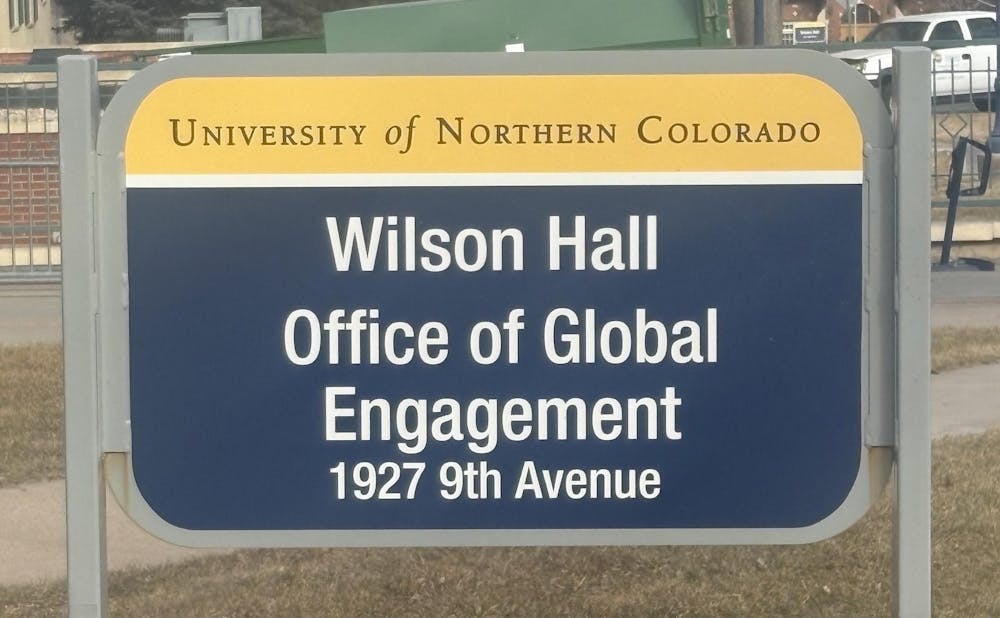
Students are not alone. Faculty within the Office of Global Engagement are committed to helping students achieve their traveling goals. The office located in Wilson Hall on Ninth Avenue is a place where students can seek help and receive access to the resources they need to travel abroad independent from the university.
“We're a passport acceptance facility, which means our services are limited to taking applications for first-time applicants, minors or those replacing lost/stolen passports,” Deanna Herbert, UNC Assistant Vice President for Communications, said in an email. “But we don't offer passport services, which entails a much broader collection of services, like processing applications, handling renewals and providing rapid, urgent travel services. Also, the support we provide in regard to visas is for inbound students, not outbound students.”
LaSota and her staff are faithful and have been an instrumental support to students traveling to Italy over spring break for one of UNC’s final university funded faculty led trips of 2026.
“I've been genuinely moved by the number of faculty and staff who've expressed interest in making sure that we continue to support these experiences for students, in whatever form takes shape,” LaSota said. “We know it's a high impact practice, and despite cuts impacting the way it may look in the future, there's clear support for UNC Bears having an opportunity to go abroad, if it's their dream to do so.”
This article originally contained inaccurate information regarding the study abroad program, but has since been corrected as of March 4, 2026.

Women In Journalism: Fighting the Gender Credibility Gap

The Need for Political Science in a Politically Turbulent World


