

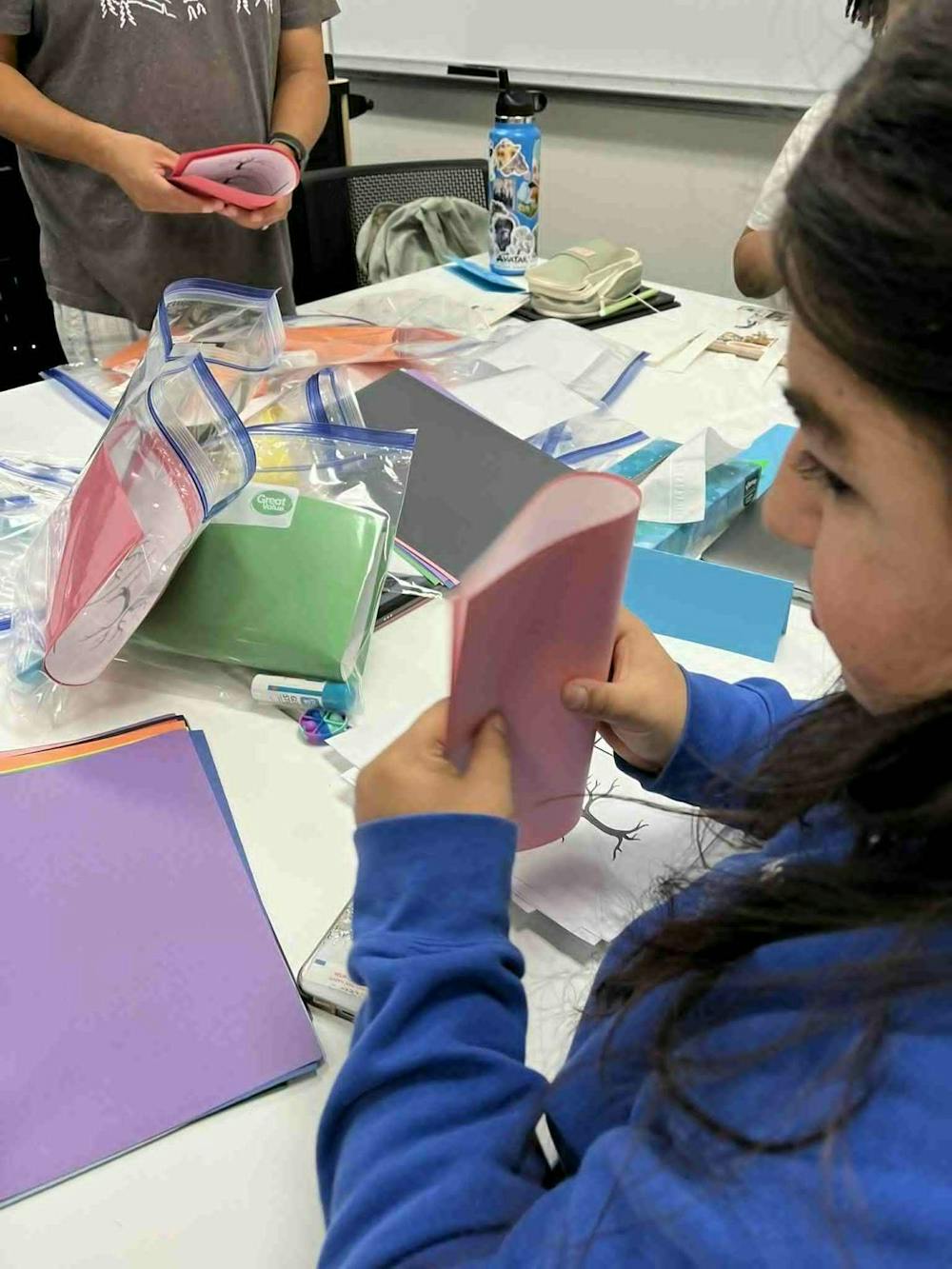
In an education class on campus, students listen as they are told to imagine a school where a teacher might teach a class in the morning, consult a club in the afternoon and coach a team after school. A place where the teacher’s name is not just known by the students but also by the parents and community. This is a rural school district.
The state of Colorado has been facing an ongoing teacher shortage in the last few years, one that has been growing since 2020. In the 2023-2024 school year, 9.18% of teaching positions statewide went unfilled for the whole school year. The schools with the biggest shortage were small rural schools.

To fill the gap, the University of Northern Colorado and the Colorado Center for Rural Education (CCRE) are building networks, programs and financial incentives to keep teachers in Colorado and rural schools.
The CCRE sends representatives to visit the campus twice a school year to tell students about the advantages of teaching rural communities. Robert Fulton from the center works as the representative for UNC, explaining the different ways one could become a rural teacher.
“There’s over 50 pathways to become a teacher, and we work with all of them. Our goal is zero unfilled positions in rural schools,” Fulton said.
The center was created in 2016 by Colorado Senate Bill 16-104 to give students incentives to become teachers in rural school districts. The center doesn't just work with universities but also with parents and volunteers at schools.
While the school district in Greeley is no longer classified as rural, there are many neighboring rural districts: Weld County RE-1, Weld RE-8, Weld County School District RE-3J, Eaton RE-2 and Johnstown-Milliken RE-5J. These districts serve Platteville, Gilcrest, Fort Lupton, Hudson, Eaton, Johnstown and Milliken.
Rosa Lowe, a fourth-year Chicano Studies and secondary education major, worked in an alternative school, Shiloh House, for her practicum. She fell in love with the community she found there.
“The community there is so much different from other schools. The ratio of students to teachers is small, about five to seven kids per core, but usually less,” Lowe said.
She worked with students who have severe trauma and behavioral issues, as well as students with autism spectrum disorder. The students are referred by former teachers and the program focuses on rehabilitation.
Alternative and rural schools both give teachers more opportunities to get to know their students and take on more roles.
The Colorado Department of Education sets aside $900,000 per year to support teachers starting in rural schools. This money goes toward completing alternative license programs and completing rural training.
Fulton explained that working at a rural school has its advantages, from tighter knit communities to more opportunities.
“You get to wear a lot more hats,” Fulton said. “In a big school, you might only teach one class five times a day. Here, you would teach five different classes a day. You can create your classes and clubs based on your interests.”
While at Shiloh House, Lowe took on the role of counselor and supervisor as well as teacher.
“I am CPI certified, which means if there is an imminent risk present, I can and will physically restrain a student," Lowe said. "I also complete continuous training and professional development on what grooming and manipulation look like. I am fully involved with the students' lives.”
Fulton works off-campus and connects with the students through presentations in many education classes. On campus, faculty work in classrooms and in advising meetings to prepare teachers to stay in Colorado and the surrounding districts.
Jingzi Huang, associate dean for the School of Teacher Education, recognizes that she has no control over where the students go after graduating. However, she said most stay.
“It’s really the environment here, it’s just beautiful, the outdoor activities, the culture, the community. Also, I think most who are from Colorado, most of them stay,” Huang said.
Huang uses close partnerships with the state and local schools to persuade them to stay. One partnership that stands out is the Undergraduate Completion Program, an online program where paraprofessionals can gain their teaching license while continuing to work in the schools.
This program helps keep students in Colorado because they are already working in the Colorado schools and are now being given opportunities to gain more skills.
“This not only helps Colorado schools but rural schools in particular because they can stay where they are in their areas and continue serving the students and families while earning their license,” said Hasan Zaghlawan, director of the School of Special Education.
Deborah Romero, director of the School of Teacher Education, explained another way they support students going into rural Colorado school districts is through a Culturally and Linguistically Diverse Education certificate.
“This prepares teachers to work with students whose English is not their first language. So, a lot of immigrant and migrant students who speak one of many other languages tend to live in rural areas,” Romero said.
The certificate is highly desired and students with it have a better chance of finding work after graduating, specifically in rural areas.
UNC also collaborates with local high schools to teach students, who want to become teachers, initial education courses. They can learn about teaching while staying in their schools. These programs are important because when students are able to get a foot in the door and stay local, they are more likely to go back to their original school districts and teach.
Lowe started working at Shilioh House because it was close to her home and realized it was her true calling.
“The kids can be tough, don't get me wrong, but having the staff I do makes the hard days easier,” Lowe said. “There is immediate support and willingness to help. And oddly, my favorite part is when students discharge. It means they graduated from their program, and it's sad to see them leave, but I know my time is done.”
Romero is still looking for ways to bring more partnerships to UNC and encourage students to stay local. Currently, she is working to introduce the Teacher Degree Apprenticeship program.
These programs would allow students who are working as school apprentices to complete the program. Currently, there is only one other school in the country with an approved apprentice program. It will start with an early childhood education focus and expand to elementary and special education.
It is similar to the degree completion program, but it focuses on students working within the classroom in rural settings.
Colorado continues to struggle with the teacher shortage and UNC leaders know the solution won’t come from just one program but a network of pathways to keep teachers in the communities that need them the most.
Students like Lowe see the impact communities have on teachers firsthand. What can start as a convenient location for them can turn into a lifelong career and commitment.
New partnerships are on the rise and opportunities are expanding for more hands-on training at UNC. UNC staff hopes more student teachers find a sense of purpose, close to home and in Colorado’s rural towns.

Women In Journalism: Fighting the Gender Credibility Gap

The Need for Political Science in a Politically Turbulent World


