In 2007, Brian Hapcic attended the Prague Quadrennial of Performance Design and Space for the first time. The event is held every four years and showcases the best the world has to offer in the art of scenography, which is the creation of stage design elements, from lighting to sound and beyond. The gathering opened Hapcic’s eyes to the infinite possibilities of his life’s work. Nearly two decades later, Hapcic accompanied five University of Northern Colorado theater design and technology students to the 15th Prague Quadrennial, where they presented their work to other scenographers. Hapcic couldn’t have been prouder.
“I was just really, kind of, over the moon about that,” said Hapcic, an associate professor of and the head of theater design and technology at UNC. “They put in the time and the work, and could approach the project in a way that was appreciated by artists and curators that selected them for that project.”

Hapcic has been crafting light and sound designs for theater productions and beyond since his undergraduate years, and was selected for the 2015 Prague Quadrennial for his work on UNC’s production of “Medea.” He began his career acting at his high school’s drama club, while also playing football.
“There wasn’t this separation like you see in a lot of schools now,” Hapcic said. “And it just seemed kind of fun.”
Hapcic didn’t get into the technical side of theater until his undergraduate years at Ohio University, where he studied to become a high school English teacher. While there, a friend told him that Memorial Auditorium was hiring stagehands. Hapcic worked as a stagehand throughout all of his undergrad years, picking up more knowledge as he went, and developing an appreciation for lighting. Hapcic still wanted to teach, but his subject of choice changed.
“Once I found out that I could go back for an advanced degree and then teach these technical skills and design skills... I was like, 'Oh yeah. This is it,'” Hapcic said. “'This is going to be my path.’”
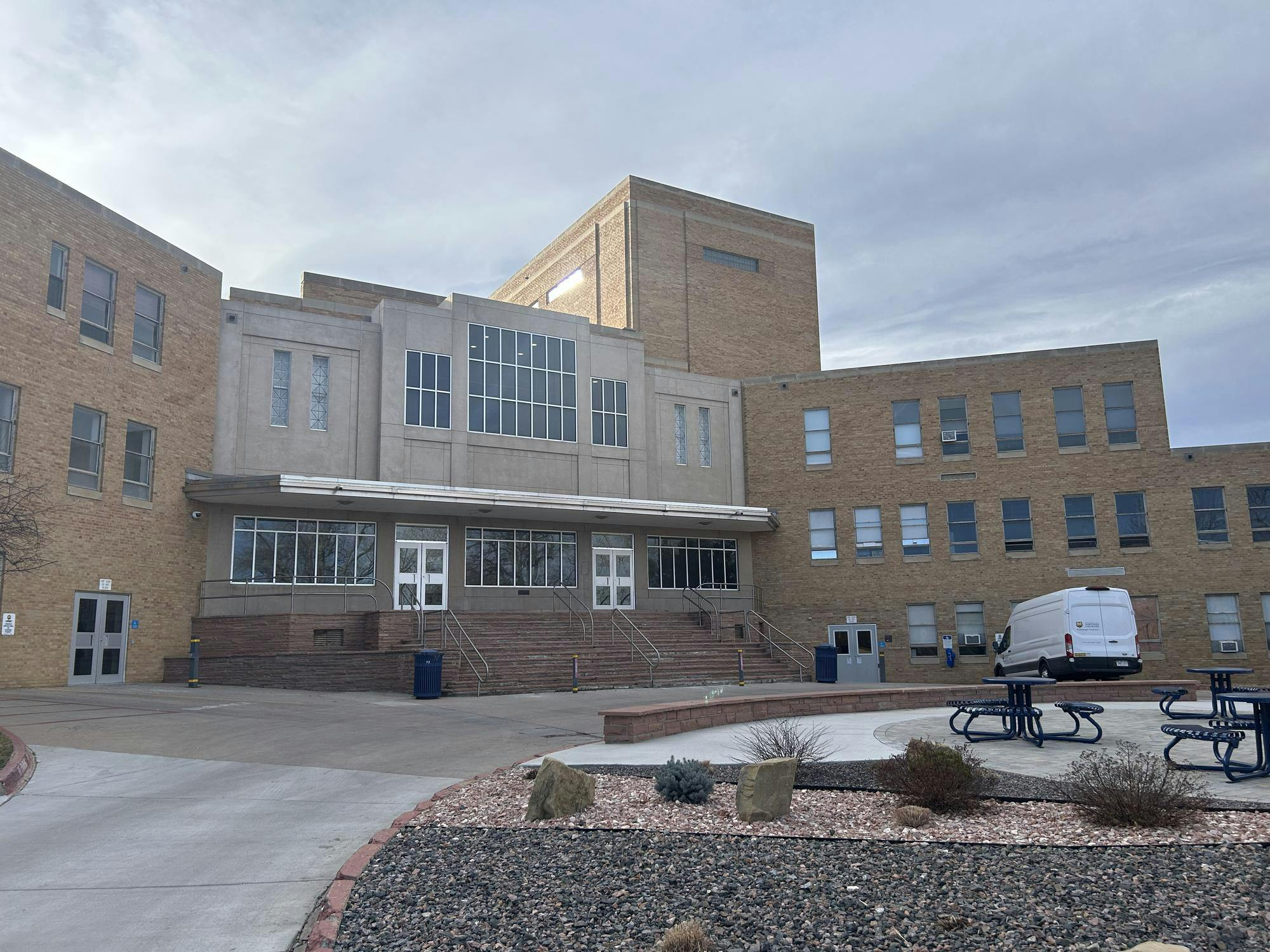
Being prepared is a huge part of putting on a successful college production, and the students at UNC know this well, as noted by Zach Hamersley, the production manager and master electrician at UNC’s School of Theatre Arts and Dance.
“It’s just a lot of hard work,” Hamersley said. “The students put a lot of work into it. Around here, we have student staff that help build the shows… What we’re doing, in our staff facility, is we’re training those kids how to either design the shows or how to build the shows.”
Hapcic and Hamersley share a love for their students, but how do they conceptualize and execute designs for a production? It all starts with script analysis.
“Each designer is bringing themselves, through their analysis, to that world,” Hapcic said. “You’re working in parallel with your other members of the design team.”
The director also has a lot of say in how the designed world is going to look, and designers like Hapcic and electricians like Hamersley have to interpret those ideas into tangible lights and sound. Then comes the visual research, where the designer looks to outside sources for inspiration regarding a piece. Hapcic utilizes keyword searches.
“Mostly, what I’m looking for are images of light that describe the way I’m seeing the scenes being set…” Hapcic said. “Then, I’m looking at those and saying, ‘Yeah, ok, what color is that? How’s that line up to an LED light that’s going to be able to replicate that color?’”
Sound design is an entirely different process, focused more on placing oneself in the world to search for sounds that should be present.
“Maybe you’re really thinking about the lighting now, but you hear something in the back of your head…” Hapcic said. “Maybe we’re looking at something that is true to the period that the play is set in. Maybe we’re talking about non-diegetic sounds, like machinery clanking … or, you know, those low hums that make the audience feel a little uncomfortable.”
Hamersley sees technical work as a way to elevate material further, but also notes that it doesn’t dictate the performance. In a way, technical elements are a bonus, not a necessity, but they certainly help to set a scene.
“You could call it icing on the cake,” Hamersley said. “If you think about Shakespeare and the original world of plays, they can exist without the fancy light cues. They can exist without the fancy sound cues… We really will enhance the mood and help with the storytelling.”
For Hapcic, he said his job is to build the world for the actors to disappear into. The rest is up to them.
“The performers are out there living in it, and, hopefully, those two things are really working together in sync…” Hapcic said. “Both of those things, the design elements and the acting, really have to connect with the audience. That’s what makes the magic.”

Finding Purpose Beyond the Jersey

Beyond the lens: Visual storytelling connects UNC athletes and fans