

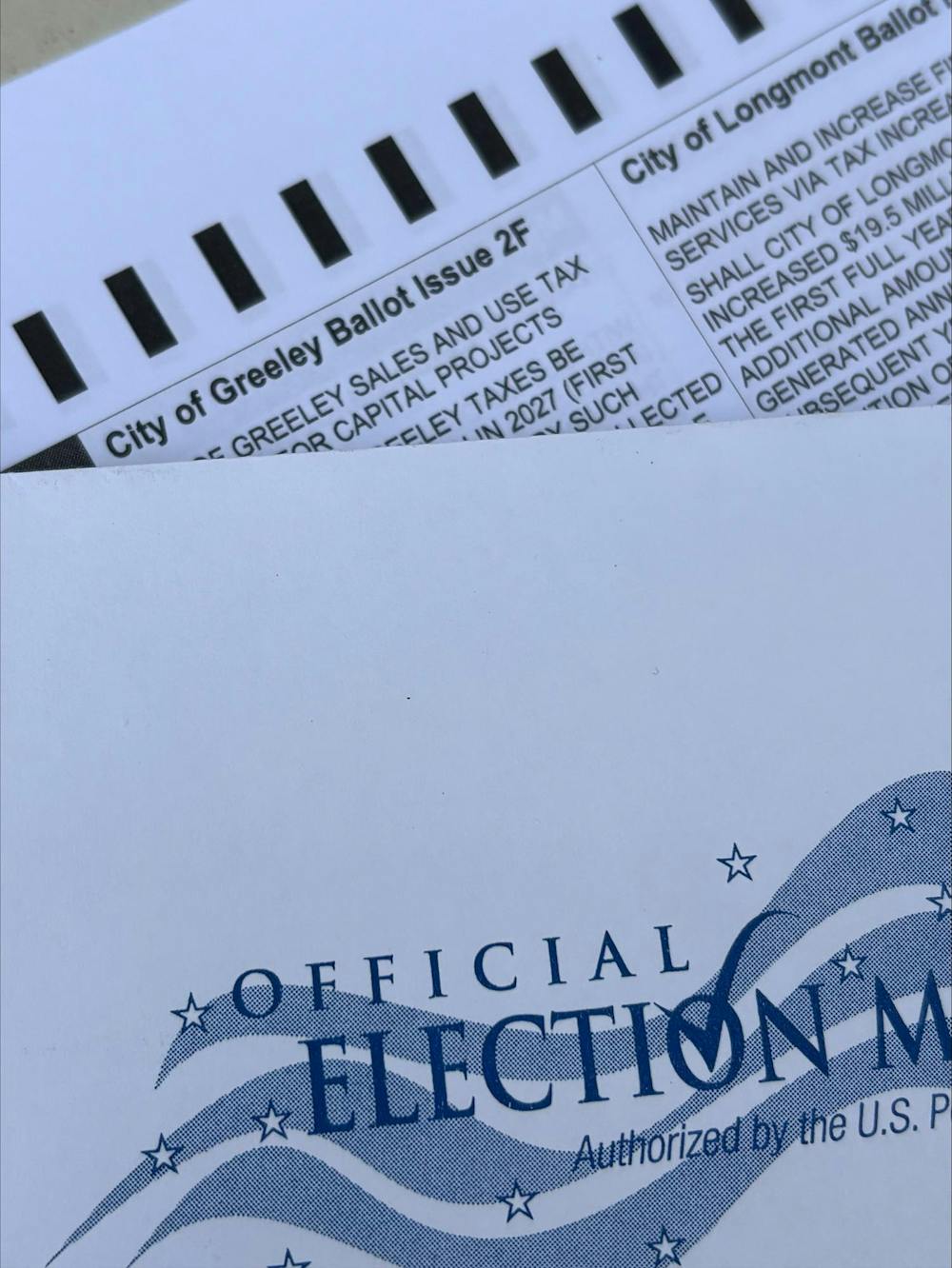
Greeley voters will decide on Nov. 3 whether to approve a sales tax increase that could fund millions of dollars in community development. The ballot measure raises a familiar question: Should taxpayers help finance a development that has faced public opposition?
Ballot Measure 2F proposes a 0.6% increase in Greeley’s sales and use tax, adding 60 cents to every $100 in taxable purchases. The increase is expected to generate around $20 million in the first year. It would fund projects such as the Downtown Civic Campus, parks and recreation improvements and the West Greeley Catalyst Project.

The Downtown Civic Campus plan includes a new City Hall, public plaza and parking garage. Other projects include improvements to parks, playgrounds, pools, trails, shelters and courts, as well as cultural, recreational and service facilities.
The measure would also support the West Greeley Catalyst project near U.S. Highway 34 and Weld County Road 17. The development would include an arena, ice center, indoor water park, hotel and convention center.
For Tiffany Simmons, who ran for Mayor against Dale Hall in 2025, the concern is not simply the tax increase, it's how the city plans to use the money.
“The City Attorney indicated that the 0.6% rate and 40-year term were selected to maximize the chances of securing revenue bonds for Catalyst,” Simmons said in a written statement via email. “I am frustrated by this approach, as two petitions and a community vote have clearly demonstrated residents’ opposition to Catalyst.”
Simmons argued that the city’s decision to include Catalyst alongside parks, recreation and other community improvements makes it harder for voters to separate support for local amenities from opposition to the development.
“Although the vote was nullified, City Council is well aware of the public's stance, yet the community's voice is being ignored,” Simmons said.
She also questioned whether the measure provides enough direction for how revenue would be distributed among the projects.
“Additionally, the ballot language lacks a clear framework for allocation,” Simmons said. “While the current narrative suggests this funding will preserve city services and amenities, there are no requirements specifying how the funds will be distributed.”
Simmons is not opposed to raising taxes, but said that the city should demonstrate responsibility and address the controversy around the Catalyst project before asking residents to vote yes on the increase.
“If this tax were strictly dedicated to paying off debt and stabilizing our finances, I believe the public would be far more supportive than they are when it is used to propel Catalyst forward,” she said.
Her concerns were echoed by resident Josh Meesey during the Oct. 6 City Council meeting. Meesey questioned why the project has been paused and assigned to an oversight committee if the city was still proposing ways to support it.
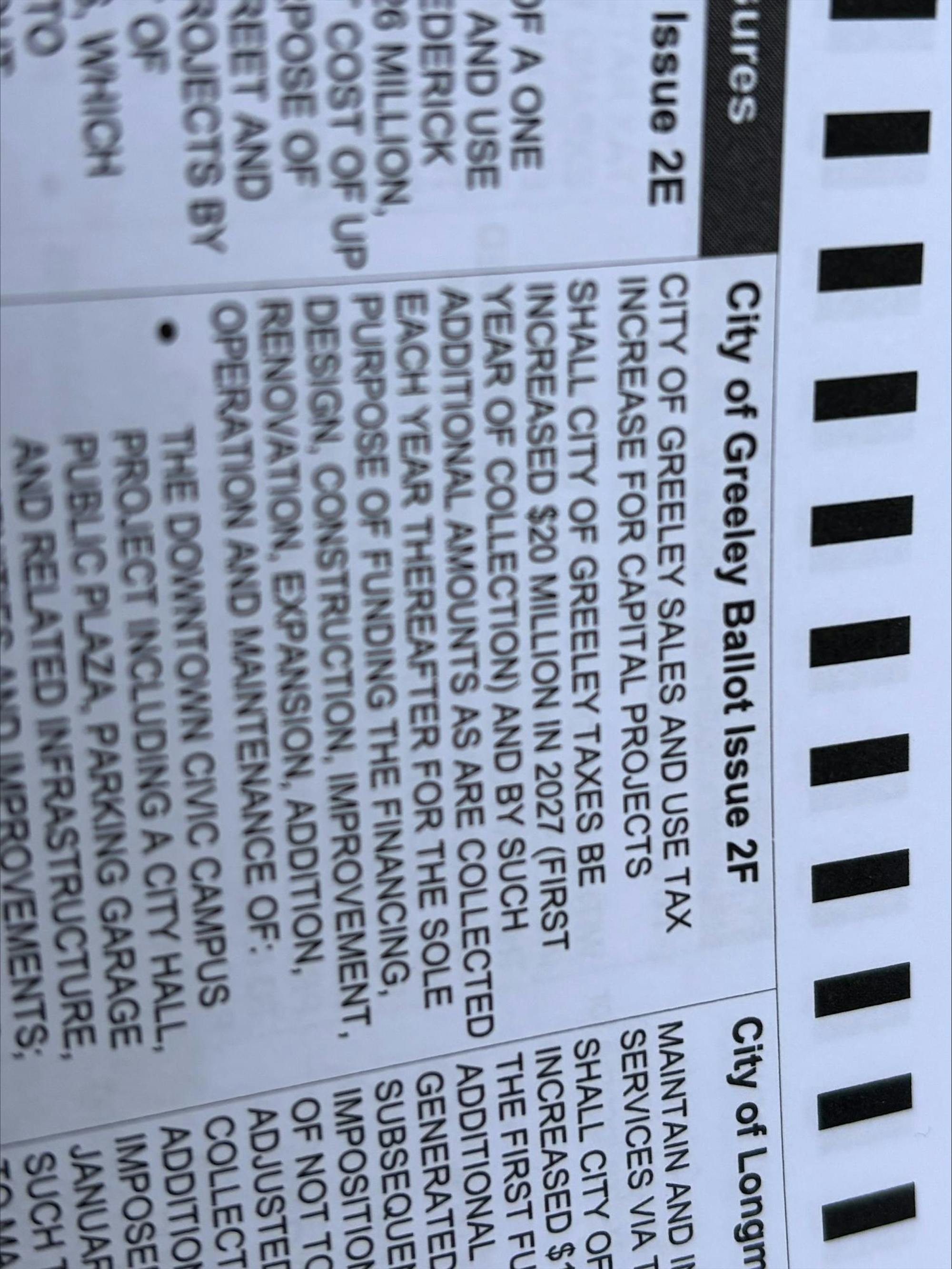
“2F replaces the financing the voters stopped,” Meesey said. “It lets the city pledge this tax to Catalyst debt until as late as 2067.”
Supporters of the measure argue that the tax would provide funding for community priorities that have gone unaddressed for years.
Bob Locke, who previously served on the Catalyst citizen oversight committee, chairs Empower Greeley, a campaign supporting Measure 2F.
“It is for priorities around town that have gone unfunded for years,” Locke said. “This is about the financial welfare of Greeley.”
Locke has also argued that the Catalyst development could give University of Northern Colorado students more entertainment options in Greeley, rather than leaving town on the weekends.
The proposed tax would remain in effect until financing for the Downtown Civic Campus and West Greeley projects is paid in full, but no later than Dec. 31, 2067.
Greeley voters will decide on the future of Measure 2F on Election Day. Voters can make their voices heard by casting their ballot at the UNC Campus Commons or the Weld County Training Center. Both locations will be open from 7 a.m. to 7 p.m. on Election Day. For a full list of voting and ballot drop-off locations, visit the Weld County Elections website.

UNC Track Builds Culture Beyond the Track

The 2027 Sundance Film Festival is putting down roots in Boulder.


